
I like to fly airplanes!
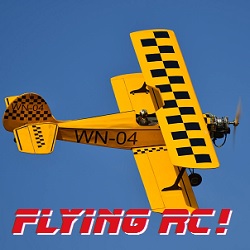
Not the big ones you can sit in, I’m talking about the small radio-controlled airplanes. I enjoy the feeling of flying while my feet are still on the ground! I like being able to control a bi-plane into a huge lazy loop, come out into an Immelmann, a slow barrel roll and finish with a Cuban 8! Throw in a rudder stall turn and a death spiral and I’m in RC heaven!
(Here are some of my “flying buddies” – Bucker Jungmeister, Bucker Jungmann, Tequila, and Zlin,)



Occasionally when I’m flying or getting set up for flying that something seems to be wrong or missing. Perhaps a wing is out of alignment, a wheel may be going flat, or the engine doesn’t sound right. I can’t see it or put my finger on the problem.
This is when I stop, step back and try to get a new perspective or perhaps get another set of eyes to help me locate the problem. Because if I don’t, I may be going home with some very expensive toothpicks and a box of miscellaneous metal parts!!
It’s the same with Leadership. Sometimes we need to view our style of leadership from a different perspective, re-consider our effectiveness, and evaluate our motivation and responsibilities.
Phil Walton, an MPact Speaker and Professional Trainer, wrote this article, “Upside-Down Leadership: 5 Reasons Why it is Important.” I wanted to share it with you and hope that it will help you become a better leader.
Upside-Down Leadership: 5 Reasons Why it is Important.
When you were much younger, did you ever hang from something upside-down? Like hanging from monkey bars? Or laying down, put your head over the side upside down? Doing so always created a different perspective on what I was seeing.
“I like to turn things upside down, to watch pictures and situations from another perspective.” Ursus Wehrli.
What about leadership? Is your leadership upside-down? If not, then it might be time to look at it from a different perspective. We all have an idea on what leadership should look like and how it is lived out. But…..maybe we need to redefine it to be better. Maybe we need to turn our perspective “upside-down.”
I recently found some notes, from several years ago, taken from an article written in the early 90’s. What was written then could easily be applied to today.
So… here are 5 reasons to consider to have upside-down leadership.
1. Leadership is not a role – it’s a function. Some people believe that others use roles to avoid relationships. A leader who relates through a role, could “pull rank,” “expect privileges, or create a ‘we/they’ detachment.” The function, however, is for the leader to serve.
2. Leadership is not a right – it’s a responsibility. According to writer Becky Brodin, in the “hierarchical paradigm, the way to accumulate power and attain success is to climb the leadership ladder.” A sense of “entitlement” can creep in the value system of a leader who expects privileges to accompany leadership – even expecting the right to be the leader. But leadership is not a right to claim; it is a responsibility to fulfil.
3. Leadership is not wielding authority – it’s empowering people. In business and/or ministry, managers are redefining their roles from “boss” to “coach.” Beverly Geber quoted in her article “From Managers to Coach,” words managers used to use to describe their leadership: “director, policeman, task assigner, baby-sitter, fire fighter, scheduler and decider.” These implied a “top-down view of leadership aimed at controlling subordinates.” Gerber went on to write, “Terms to describe their new roles include coach, trainer, facilitator, delegator, educator,” shifting leadership from controlling others to empowering people so they can do their jobs.
4. Leadership is not winning popularity – it’s influencing people. Becoming more concerned with image, what others think of you, etc., is the first step a leader takes toward dictatorship. The energy and creativity that could have been used to influence people will instead be spent making sure people are submissive and respectful. Yet influence, not power, earns respect.
5. Leadership is not a gender, race, or age issue – it’s service. Everyone has the potential to be a leader. Mothers lead their children, fathers lead their families, teachers lead their students, and managers lead their employees. “The essence of leadership transcends human differences and shows itself in myriad personalities, situations, and responsibilities.” Let’s not limit leadership to those who fit a stereotype. All of us are called to serve – and sometimes that means leading.
Maybe it is time we look at leadership from a different perspective.
What do you think?
Leave a comment below . . .